Jaiik LeeStill In Flux
"I have explored the evolution of life through the language of metal art." — Jaiik Lee
Installation Views
Artwork
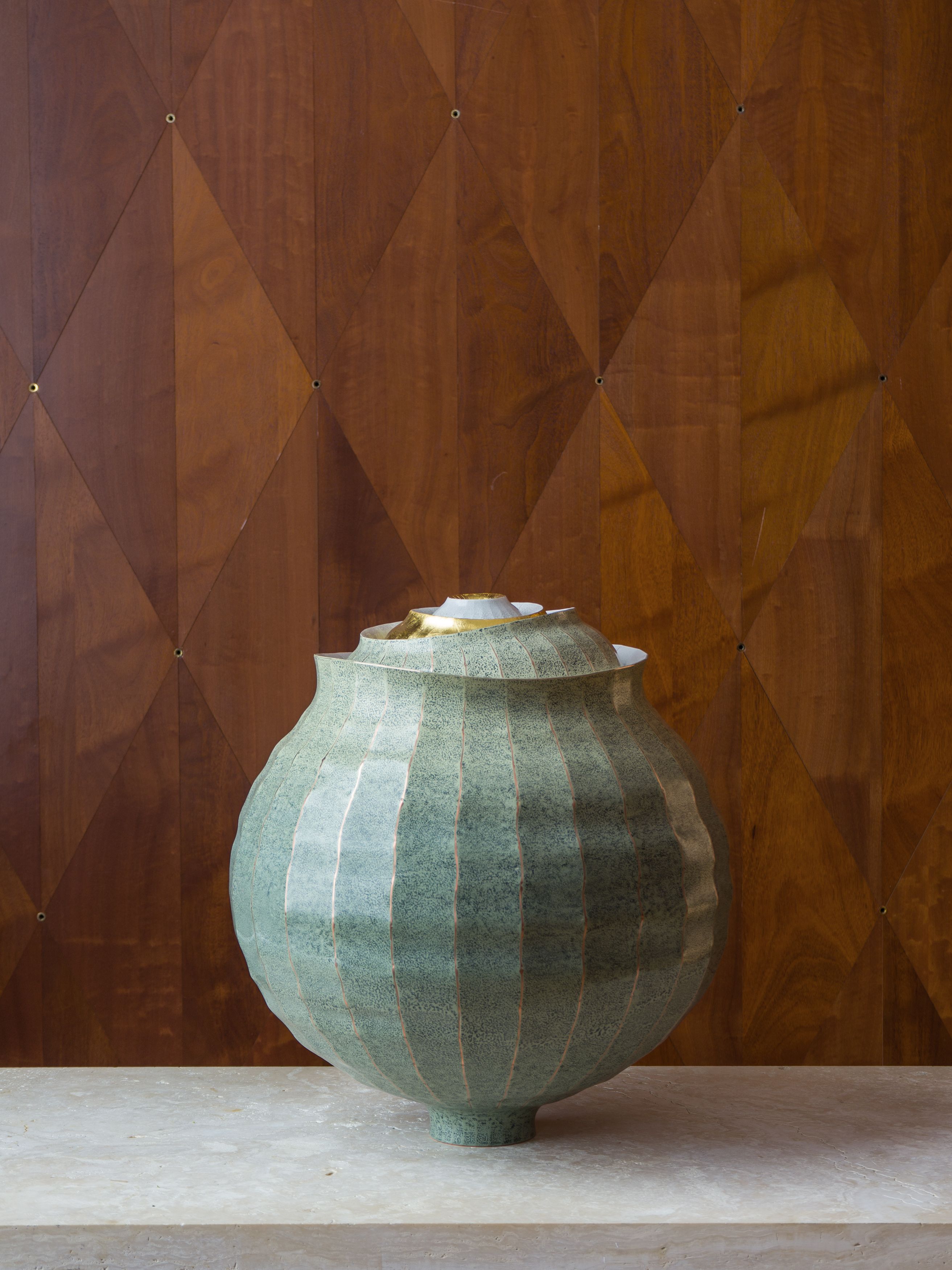
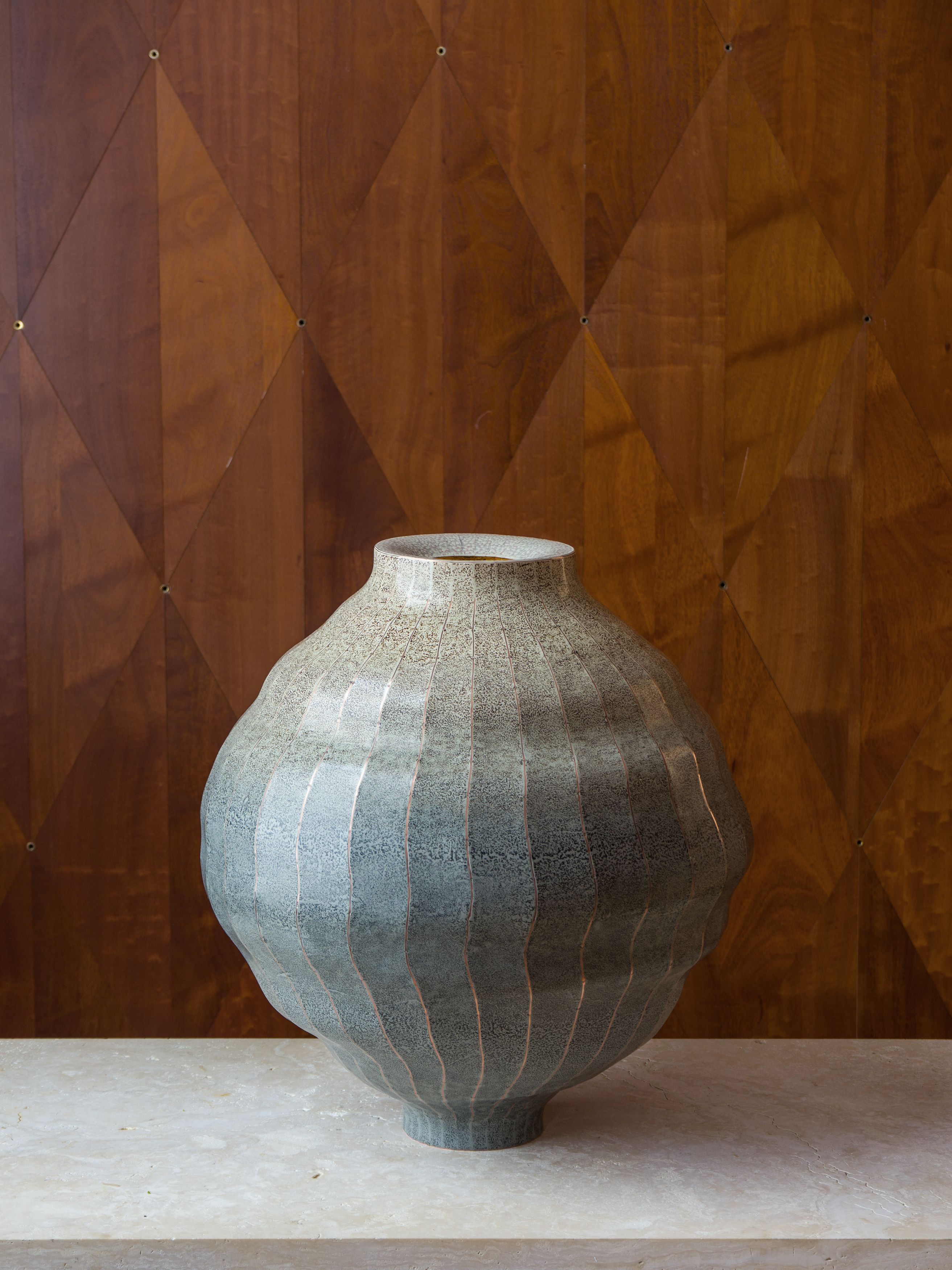
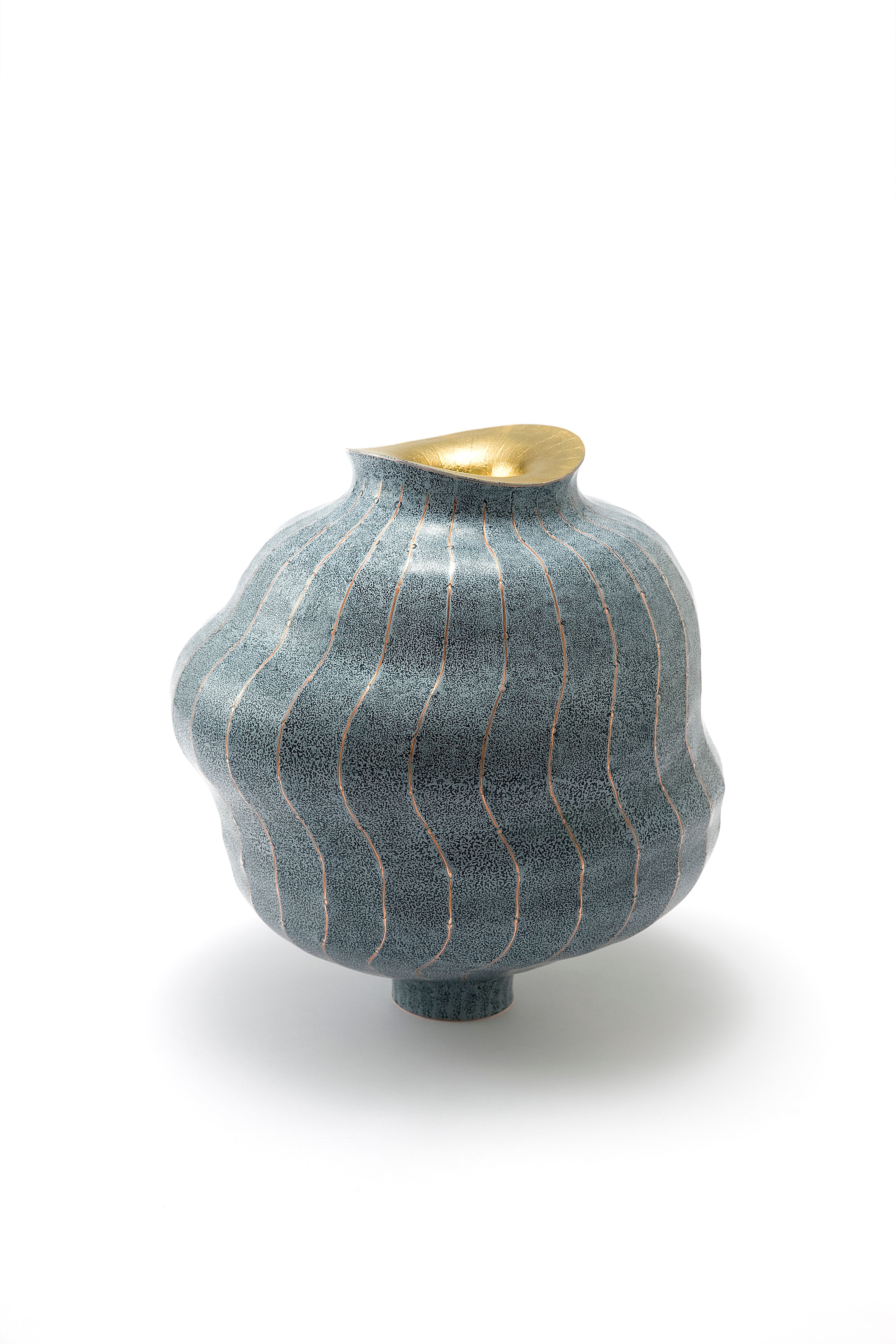
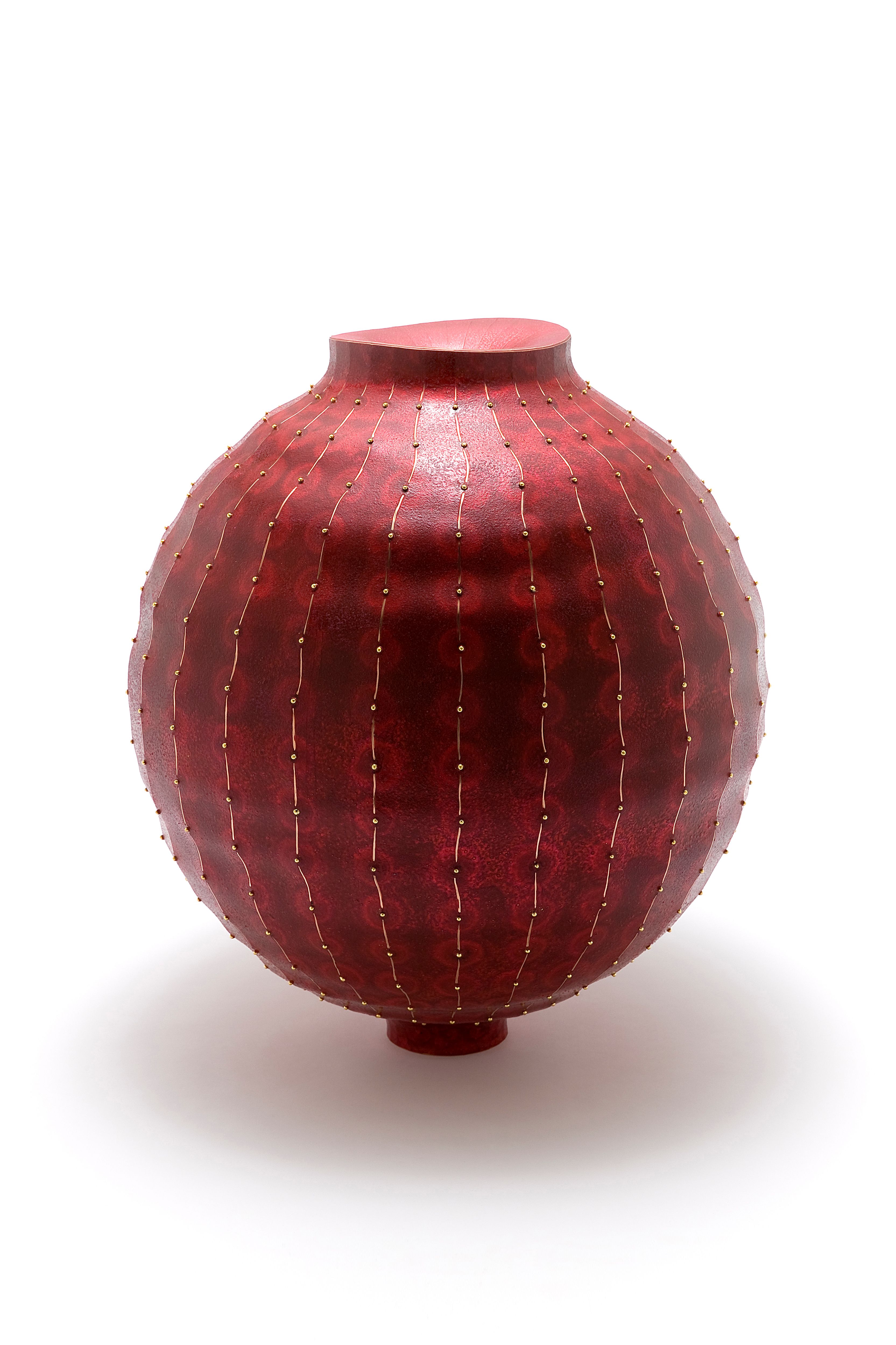
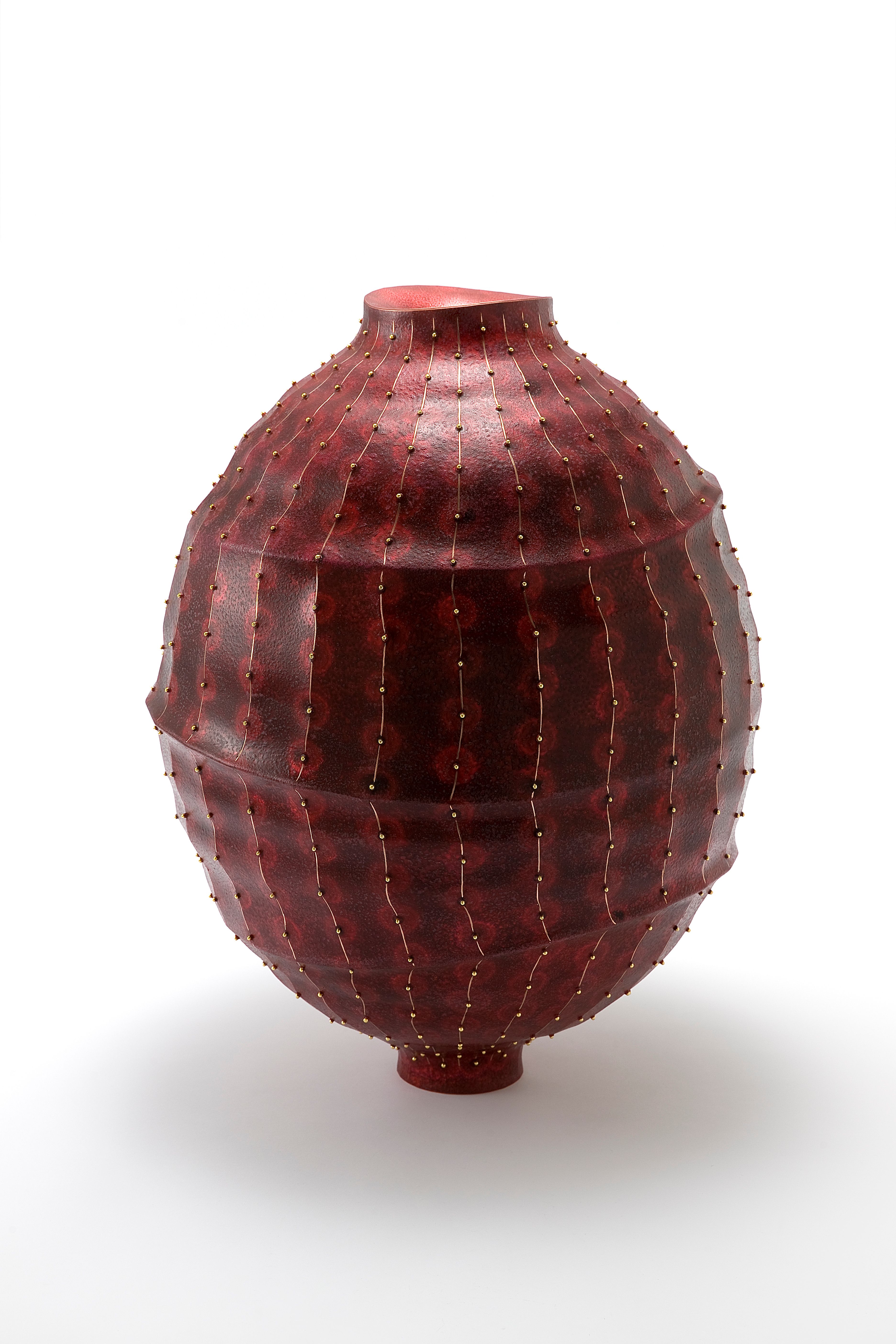
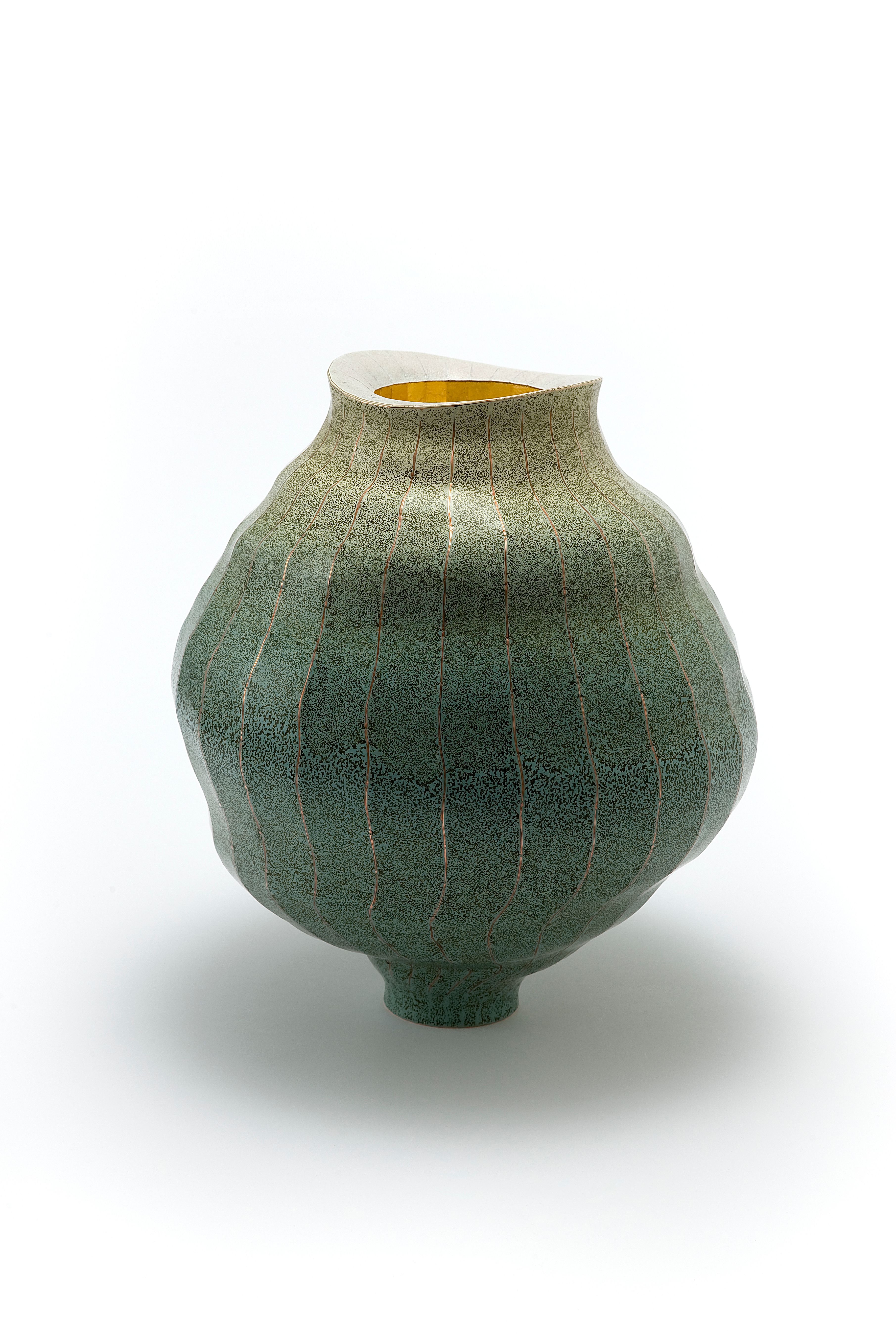
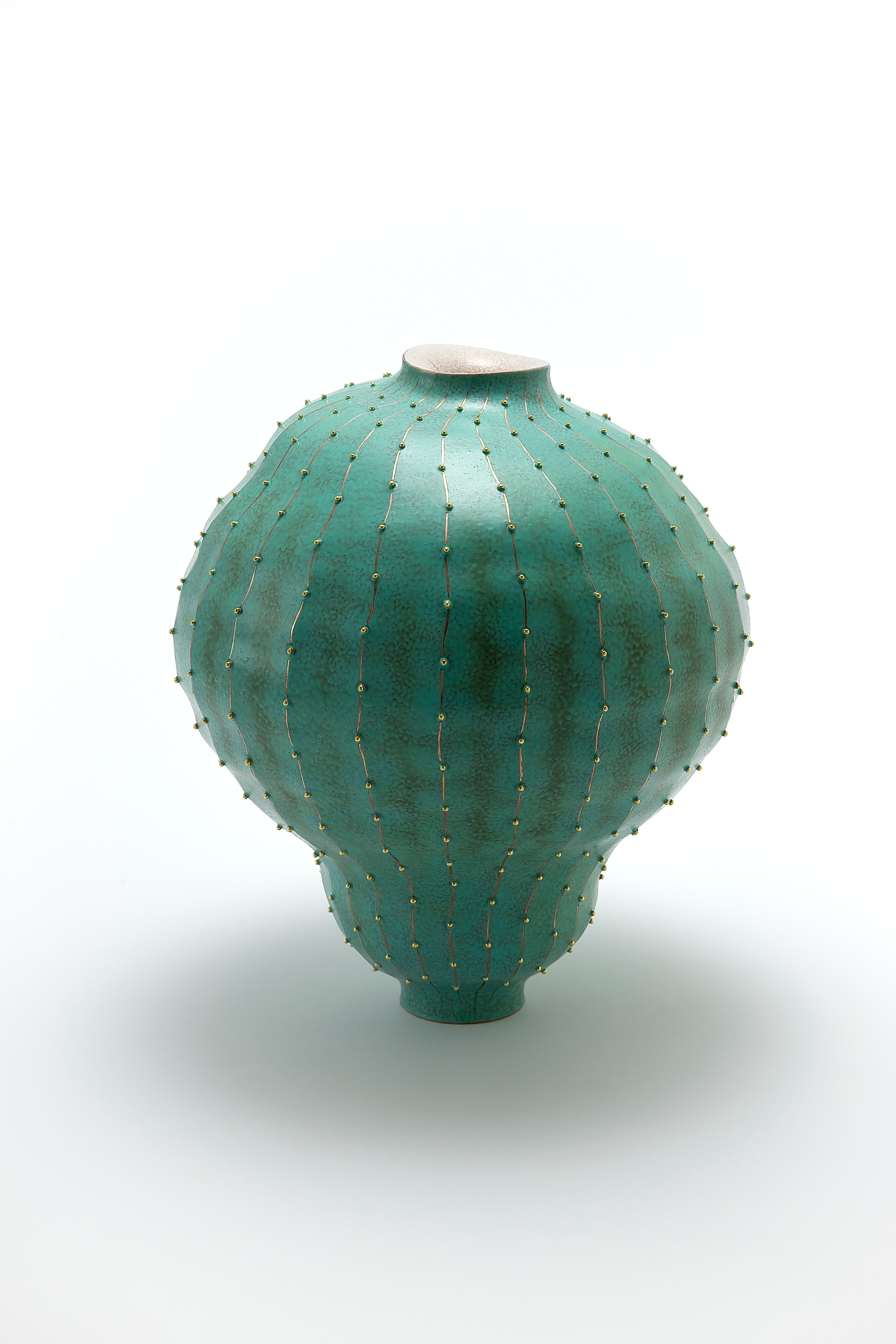
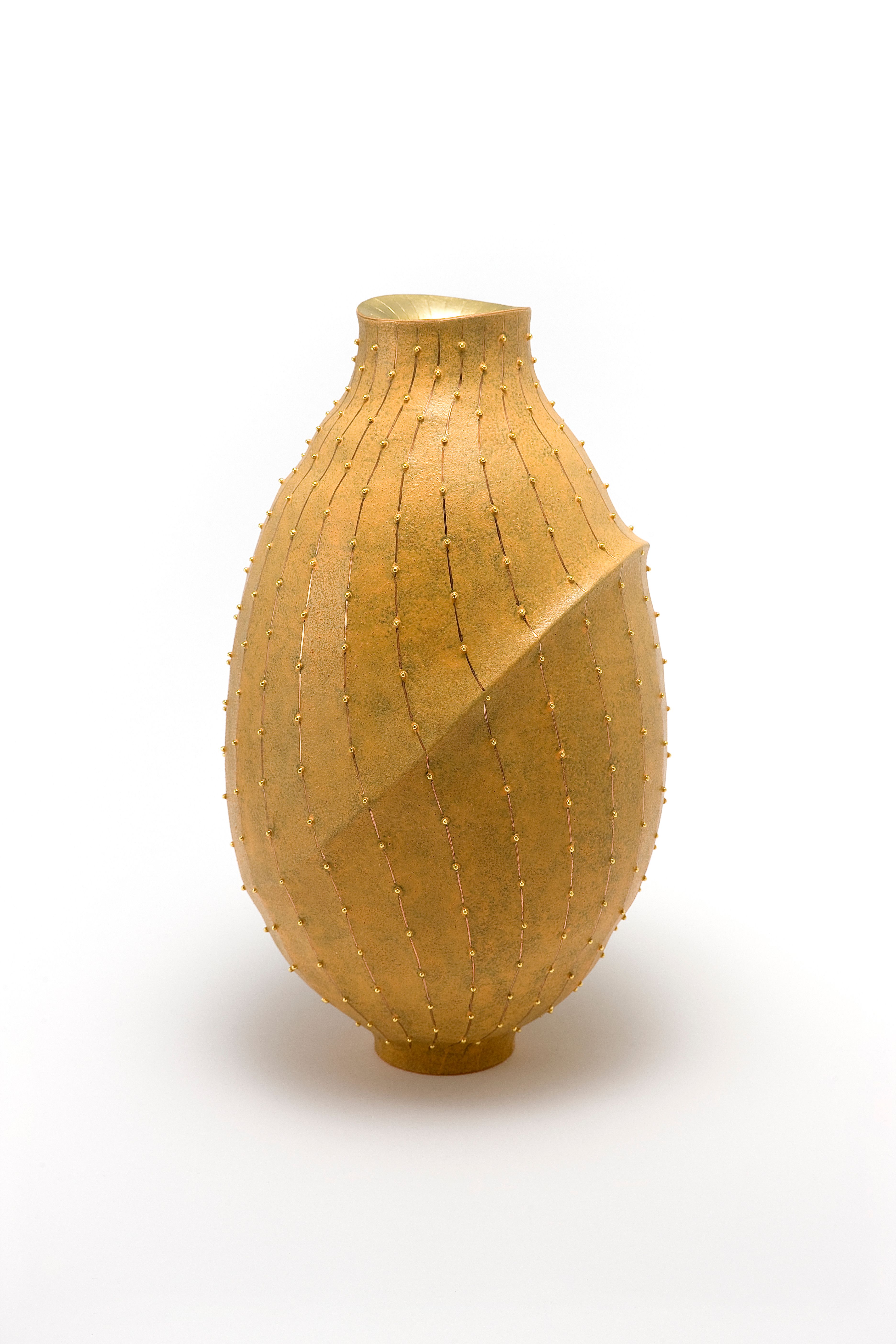
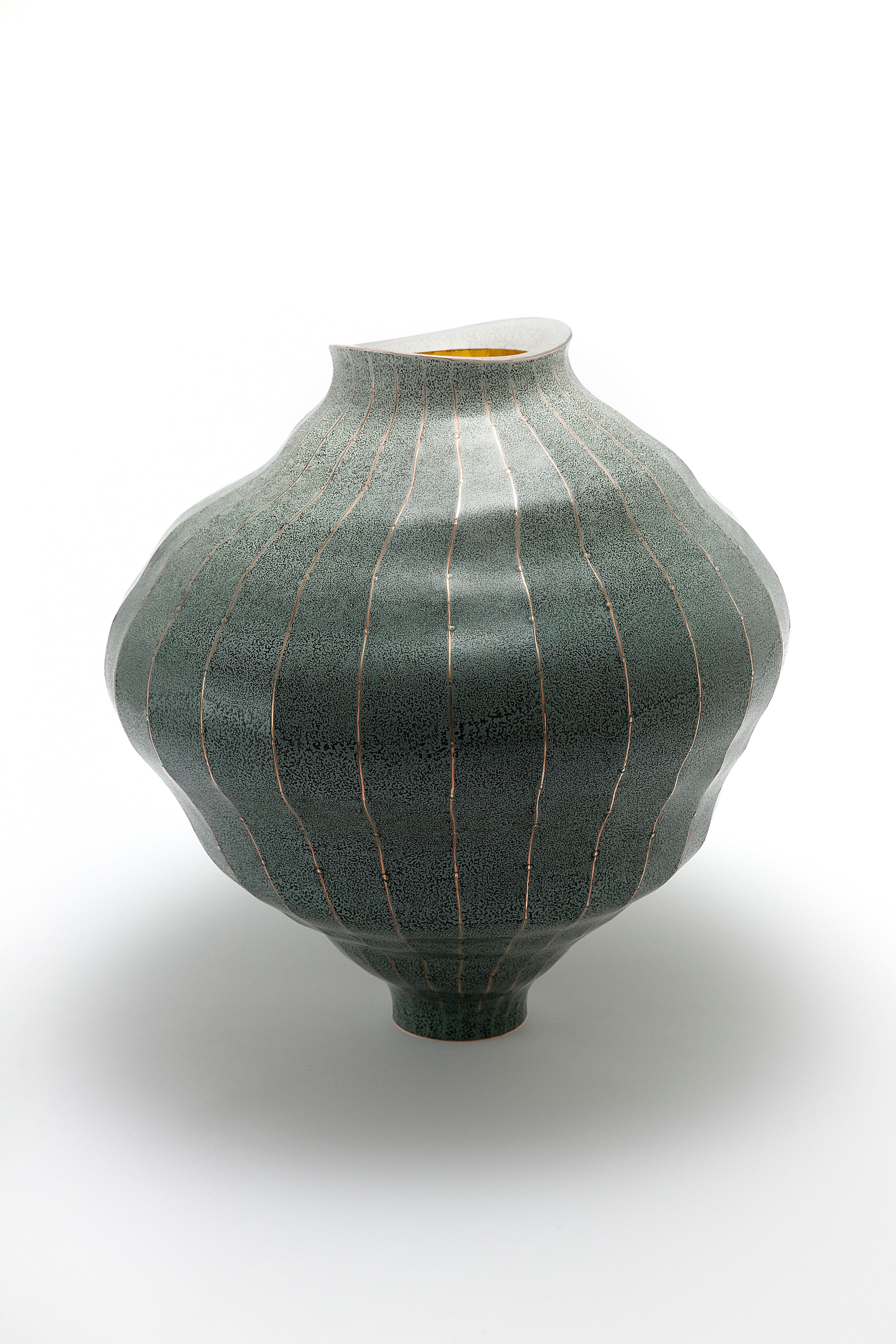
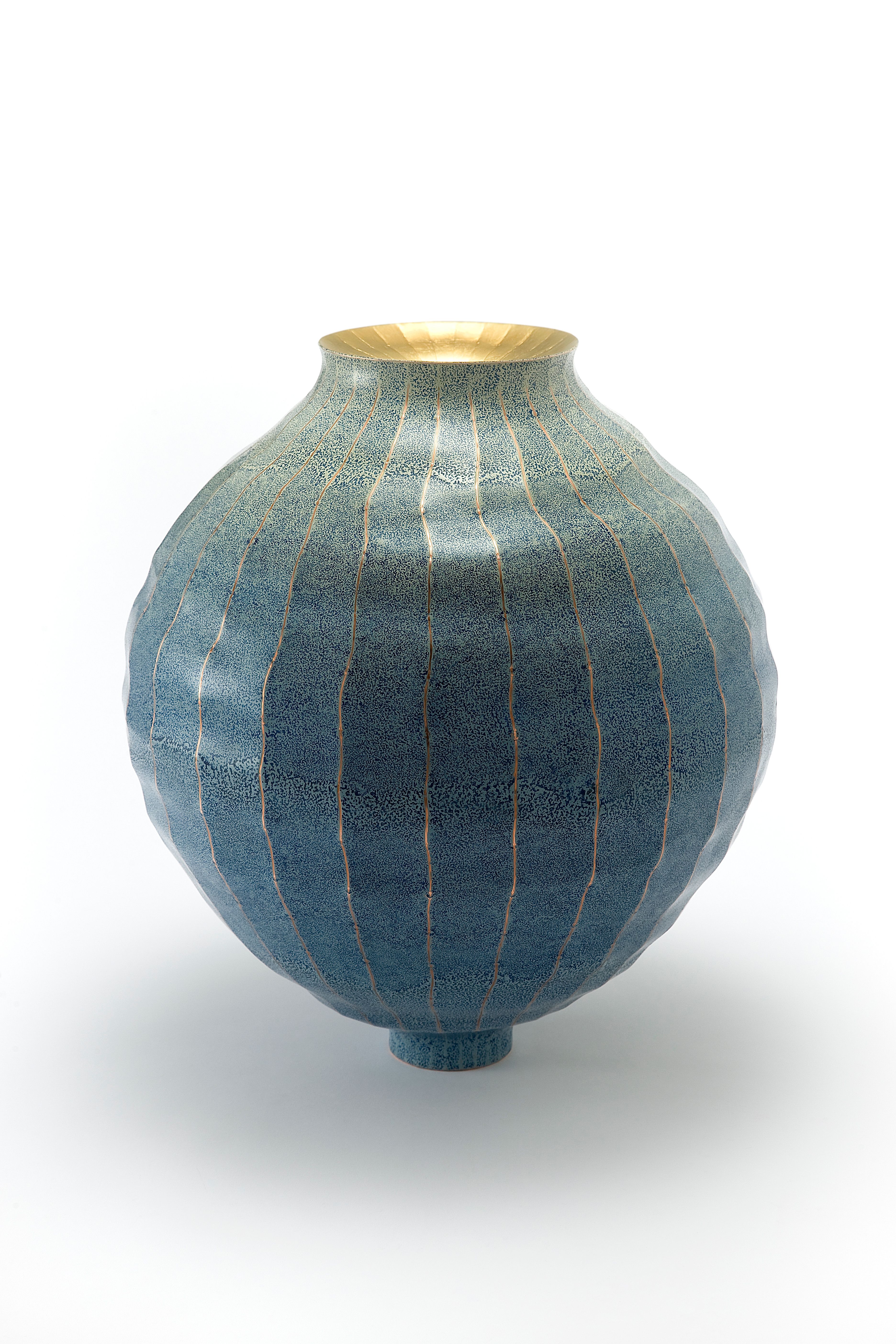
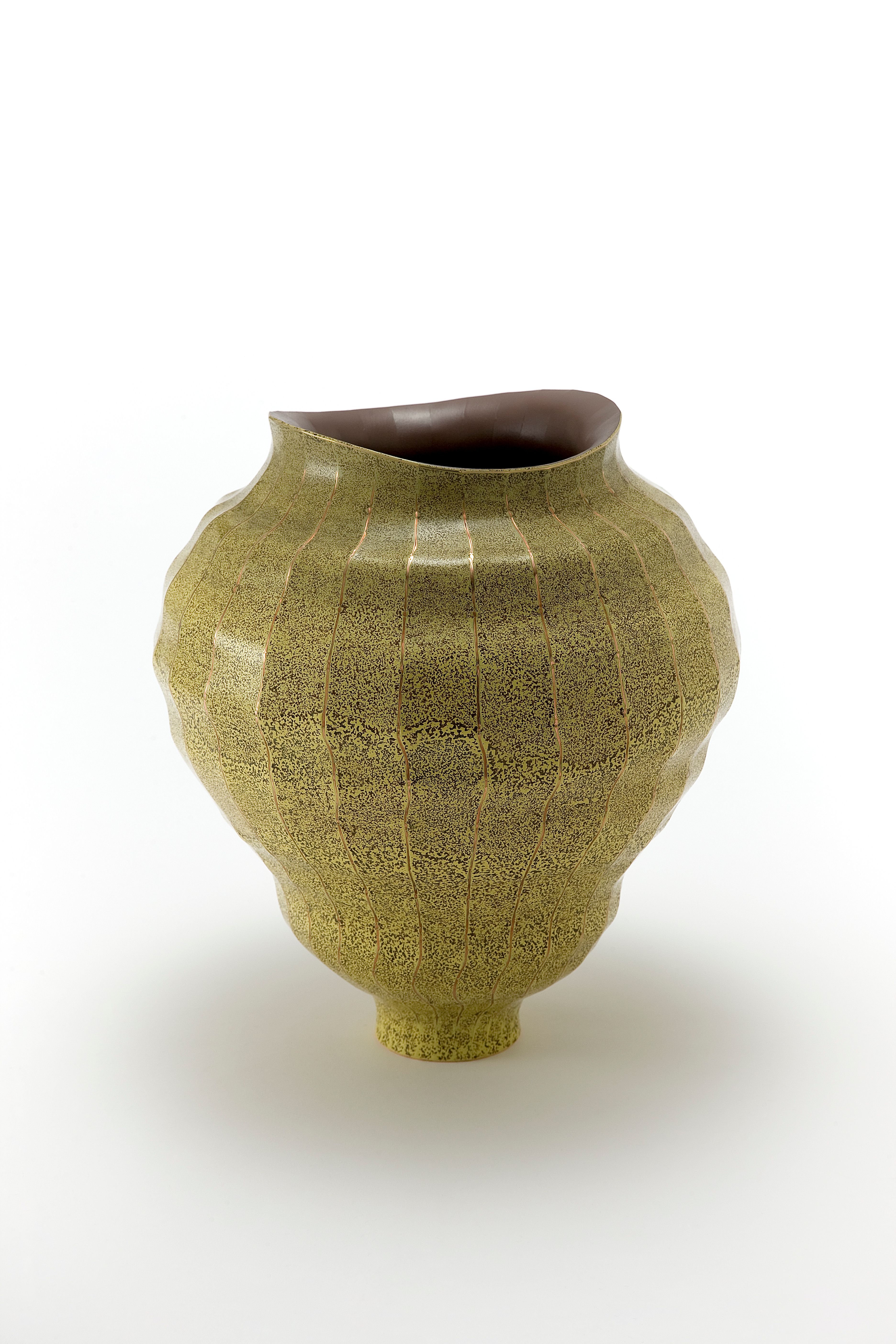
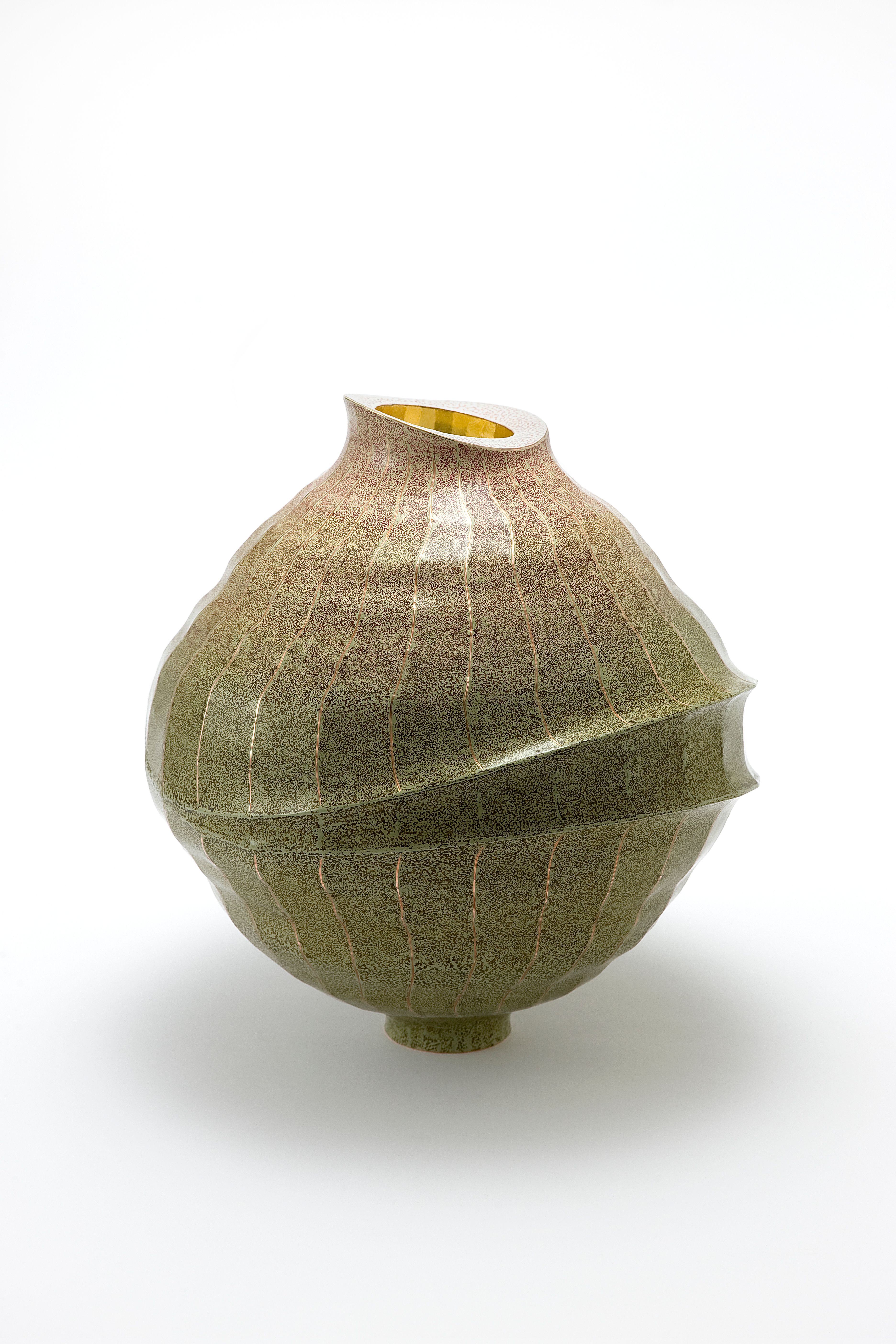
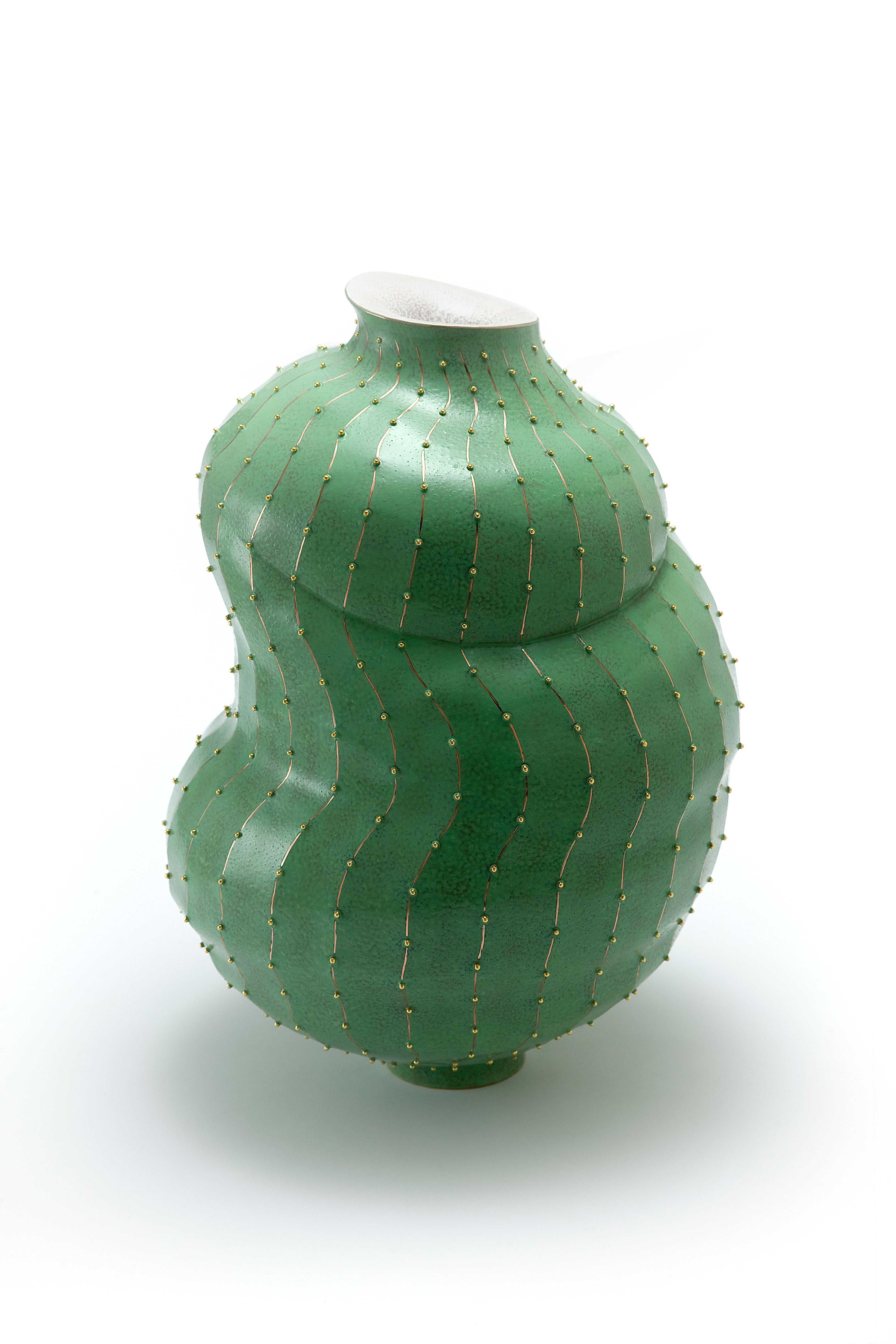
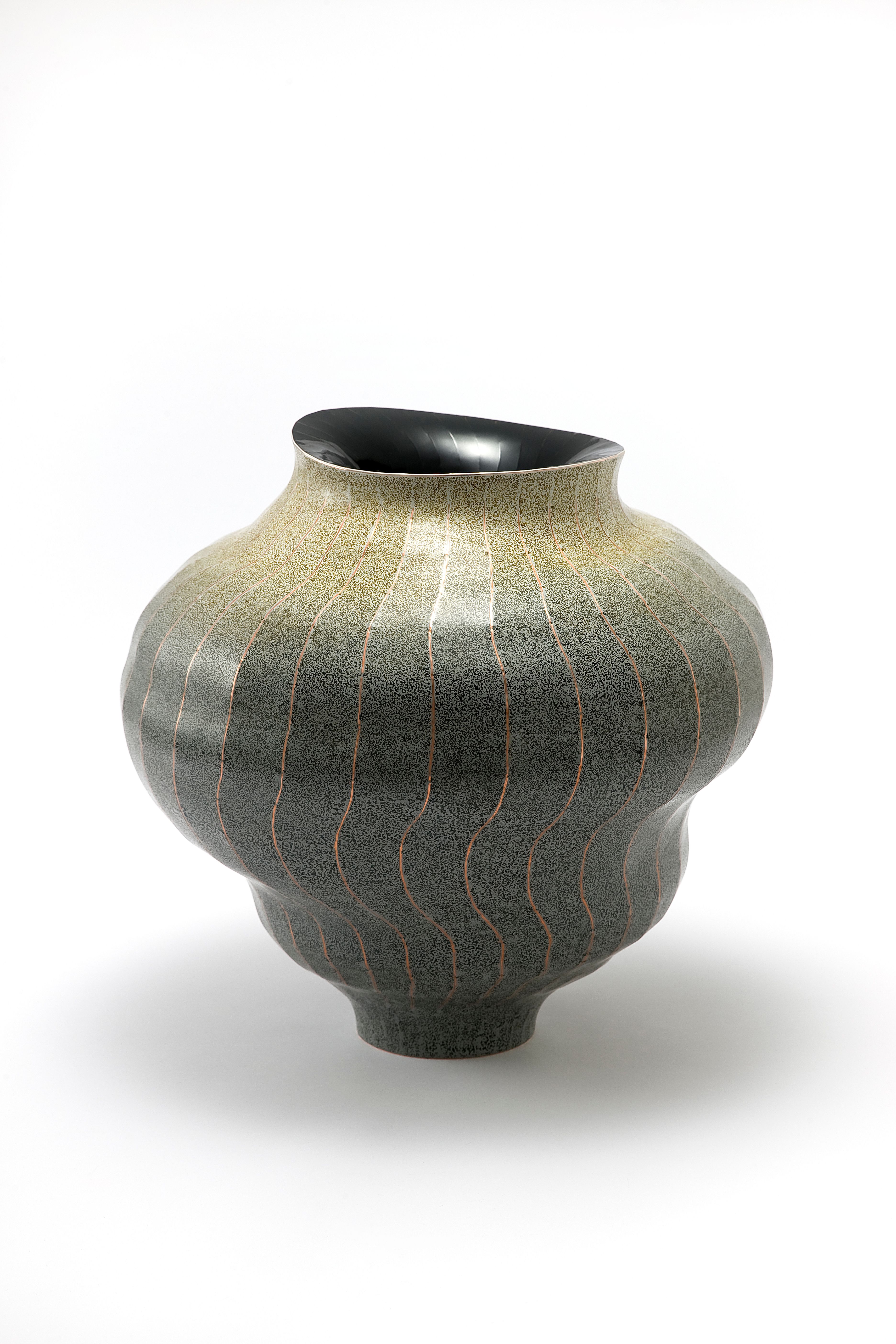
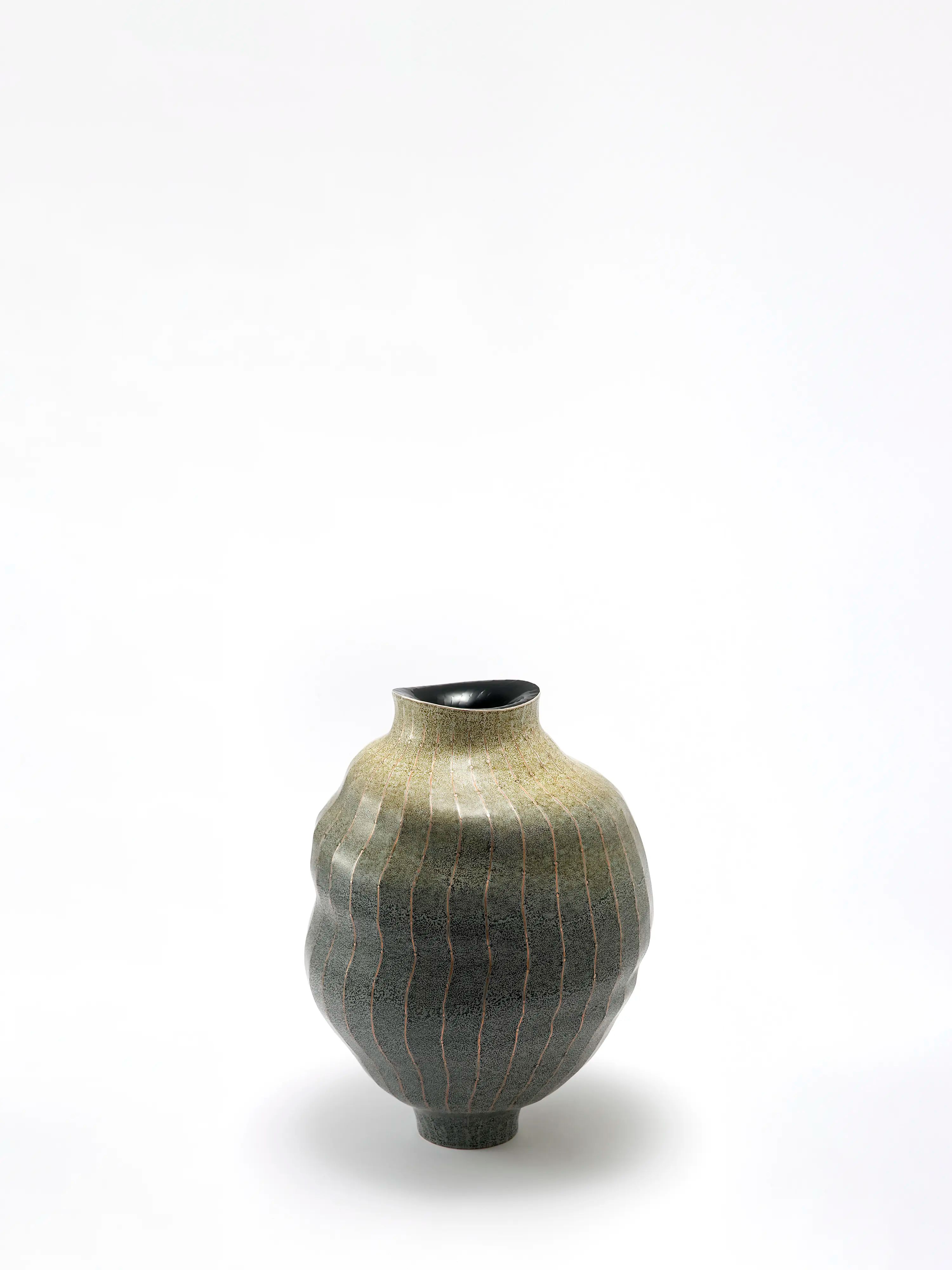
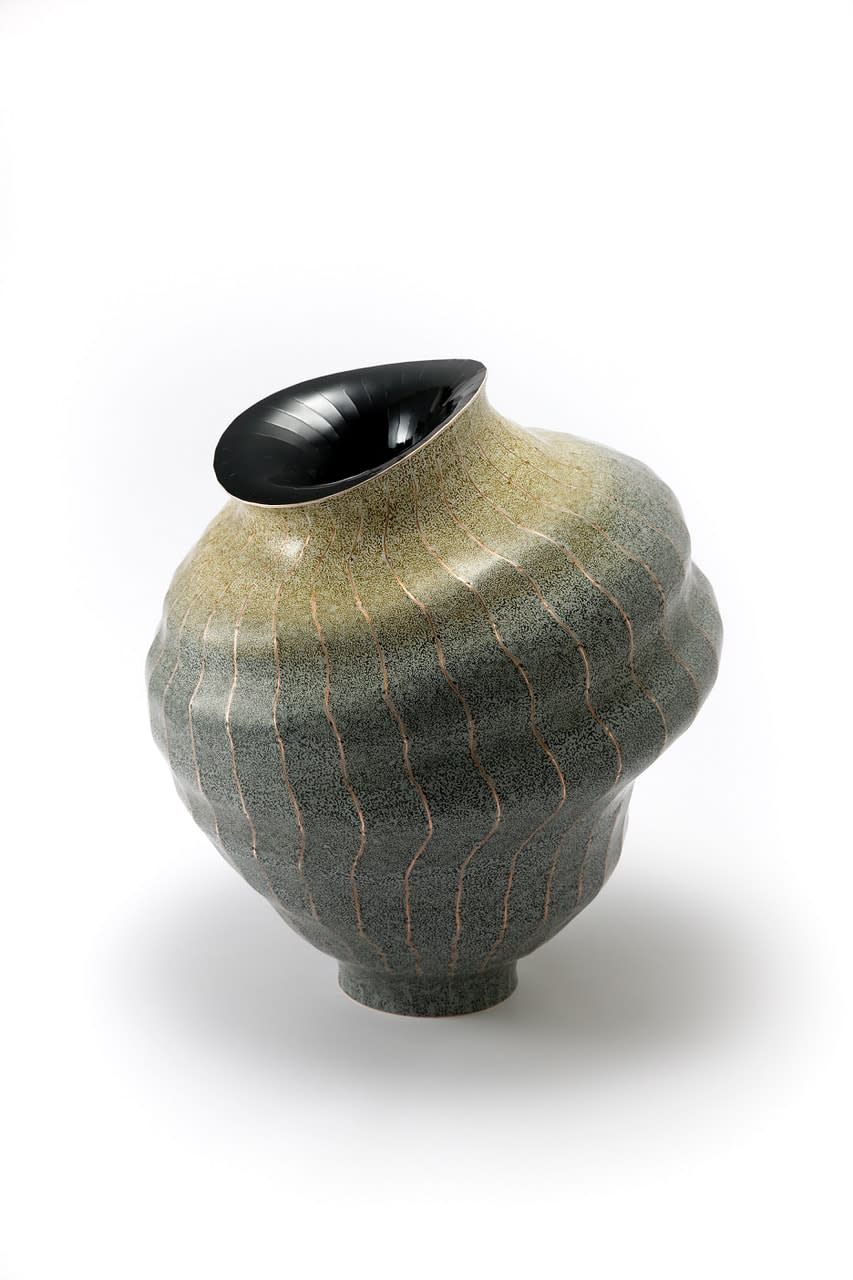
"What I want to grab is not perfect forms of living things, but a state before their perfection—their movement in a fleeting moment when they struggle to go towards a new phase, when they are crouching or inflating their bodies to protect themselves from the outside world. Irregular curves, uneven surface, and tightness of joints all are responses of life to survive the stress and harshness of the outside environment, and are elements of my metal sculpture."
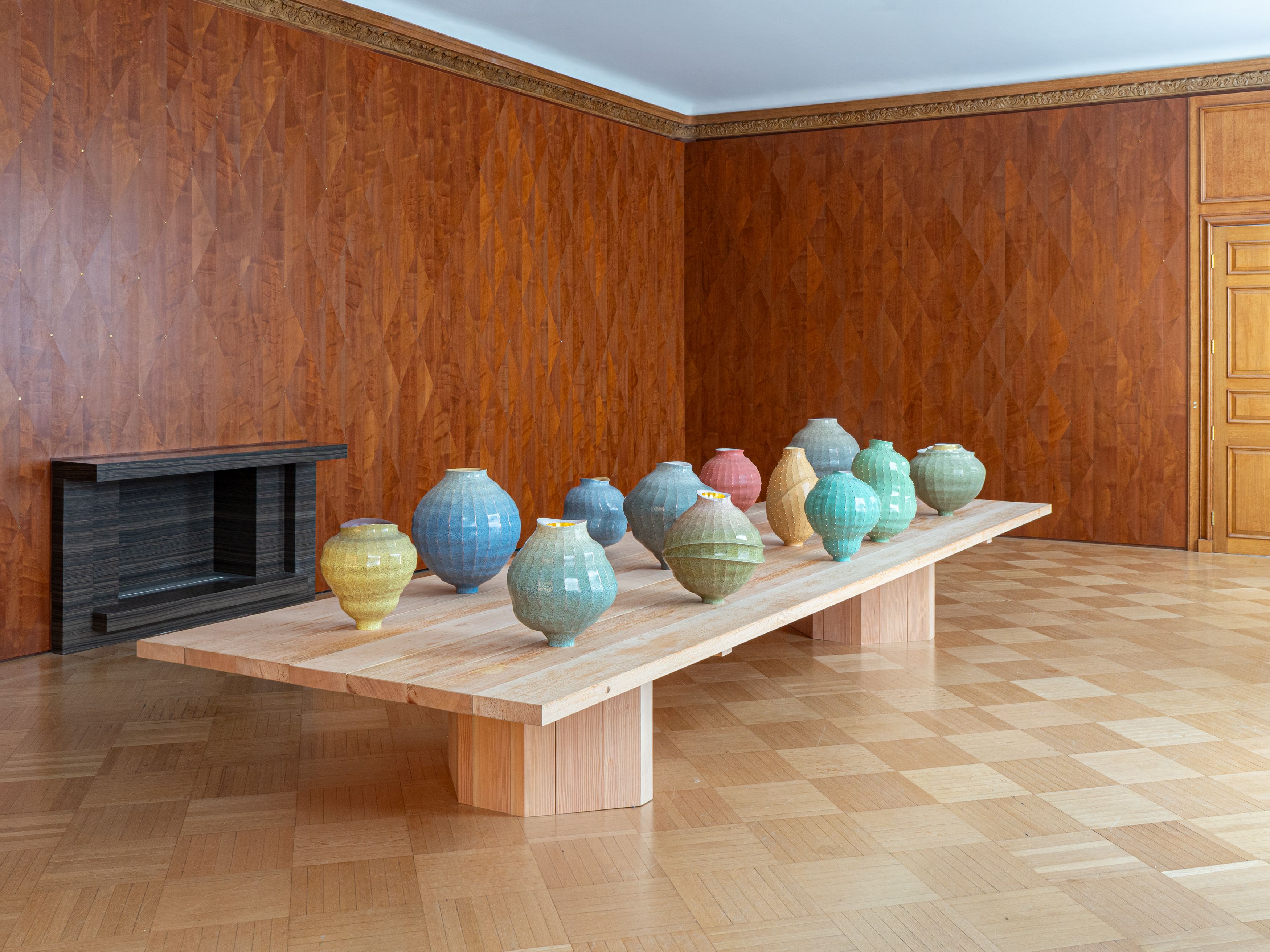
Jaiik Lee's vessels possess a striking duality: they are profoundly physical objects, rooted in material and craft, yet they radiate something ethereal, almost otherworldly. They feel alive, organic—not like welded metal at all, but like forms that are still growing, still evolving, caught in a process that might continue beyond the present moment. The copper glows from beneath layered porcelain color, creating a warmth and depth that speaks to both their material origins and their transcendence of those origins. This slippage between what they are and what they seem to be, between the technical rigor of their construction and the breathing presence they project, lies at the heart of Still in Flux, Salon 94 Design's first solo exhibition with celebrated Korean artist Jaiik Lee.
Lee's process moves fluidly between digital precision and physical intuition—works begin as CAD models that are "unfolded" into patterns of vertical panels, then laser-cut from thin copper sheets. But they come into being through the hand, through time, through the unpredictable collaboration between maker and medium. Lee then hand-welds these panels using TIG welding, a technique originally developed for aircraft manufacturing that requires absolute control and leaves minimal distortion. Each vessel consists of between twenty and thirty vertical seams that create a visual rhythm across the surface, deliberately emphasized rather than concealed. Copper, under his care, ceases to be inert. It asserts agency, offers resistance, proposes alternatives.
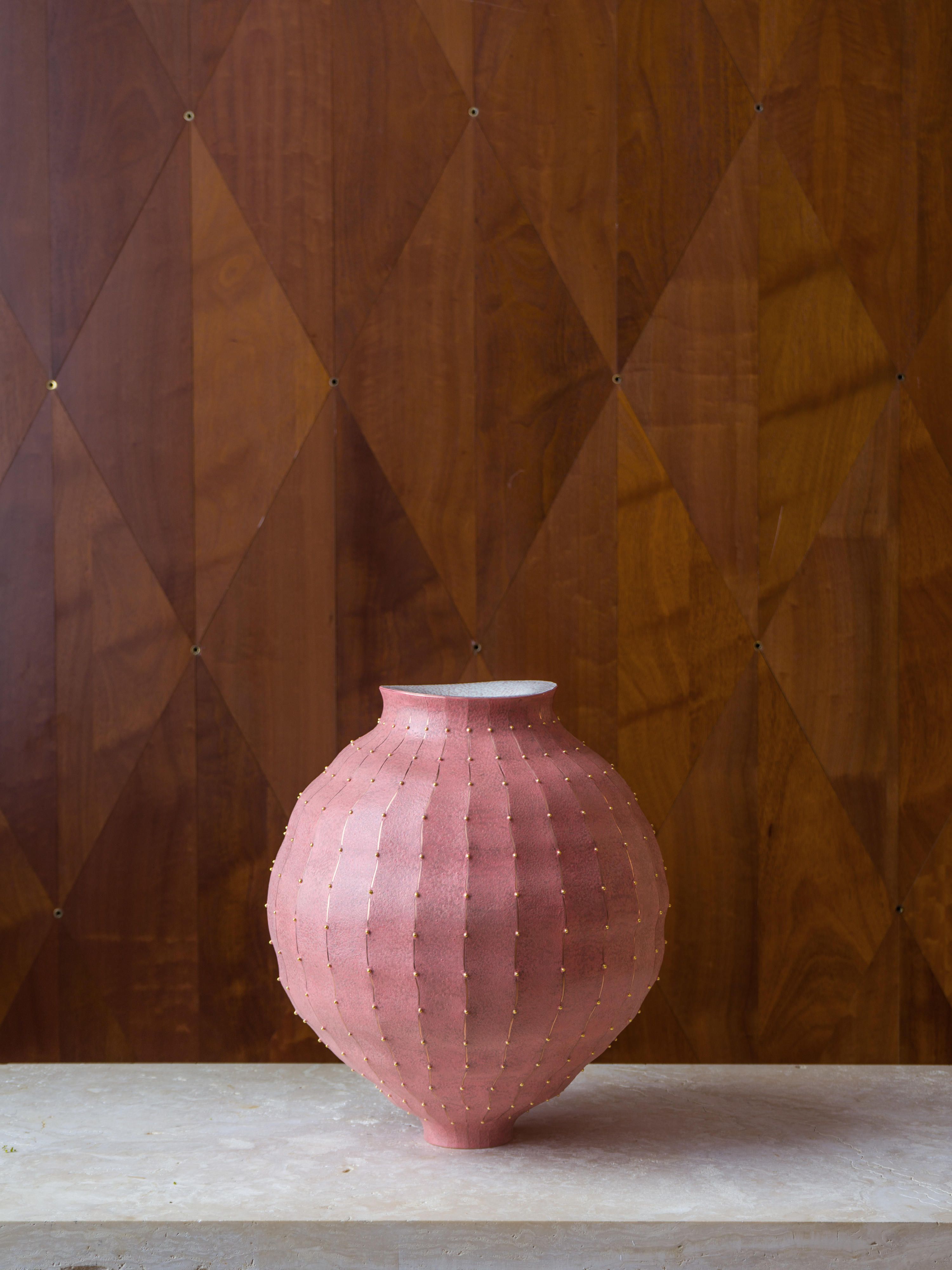
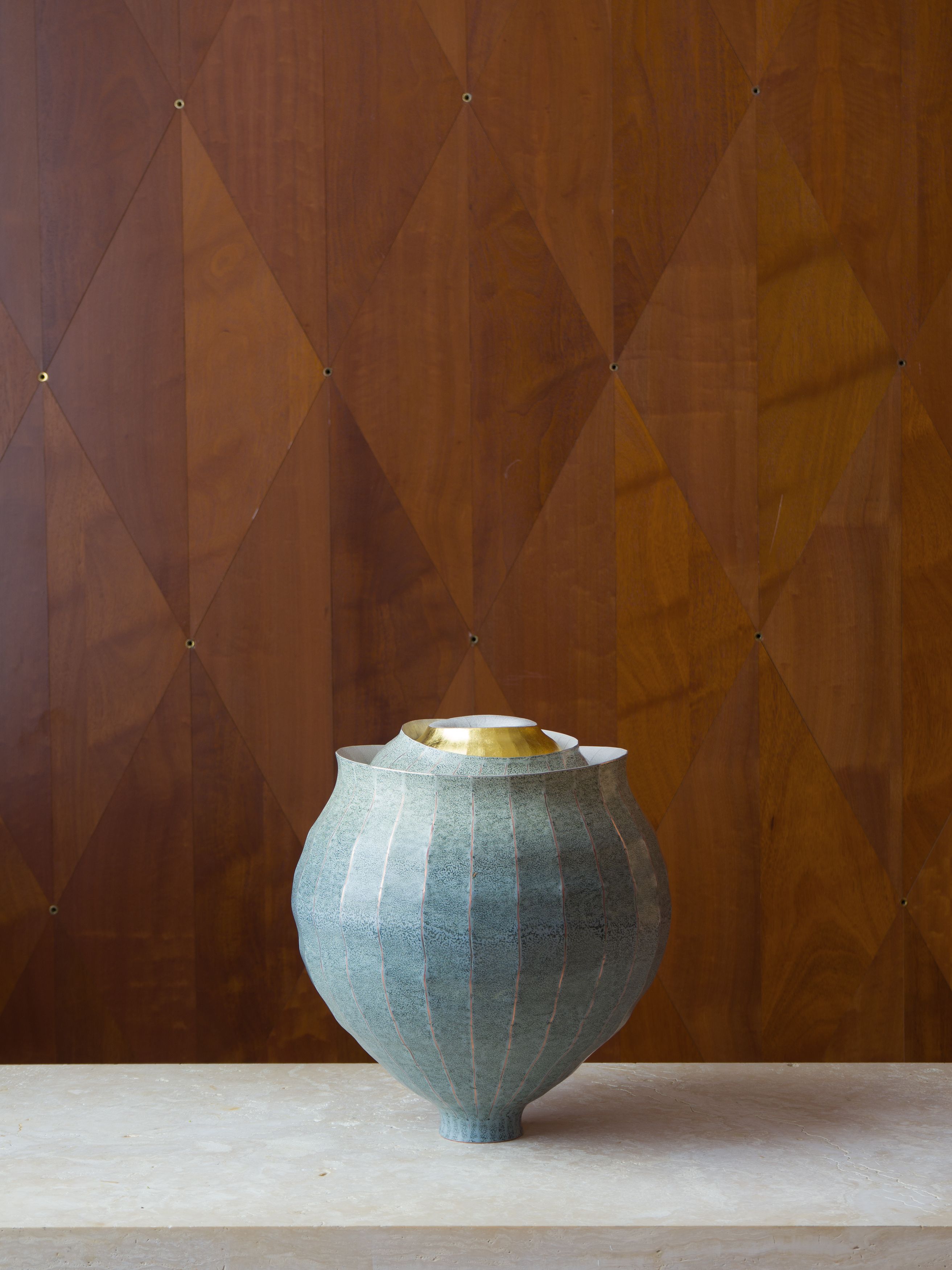
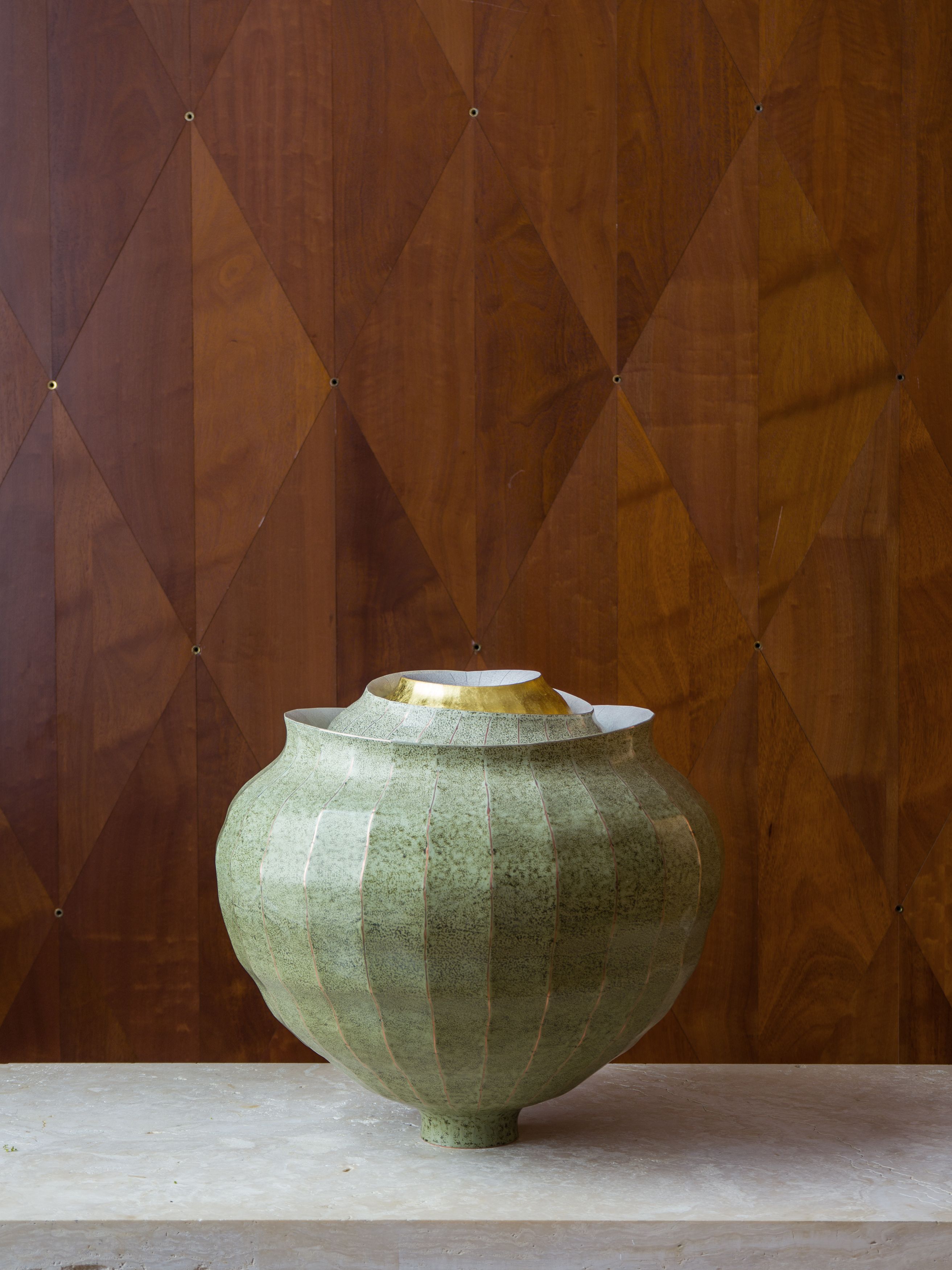
After welding, Lee applies porcelain color—materials borrowed directly from ceramics—over the copper in multiple layers. This is where the alchemy happens: he grinds down each layer, reapplies, grinds again, building a complex surface where each stratum remains partially visible beneath the next. Small gold leafed dots punctuate the welding seams like decorative rivets, while burn marks from the welding process are preserved as part of the work's visual language. The result confounds immediate material recognition—the eye registers ceramic warmth, but the form's precision and the subtle glow of copper eventually assert themselves.
By translating the forms of Korean moon jars into this contemporary metalworking vocabulary, Lee creates objects that honor their ceramic origins while speaking an entirely contemporary language. Moon jars—white porcelain vessels from the Joseon Dynasty (1392-1910)—were created by throwing two hemispheres separately on a pottery wheel, then joining them while still wet. The seam where upper and lower halves meet remains visible even after firing, a deliberate evidence of construction. These vessels were prized precisely for their imperfections: their slightly asymmetrical forms, their subtle surface variations, the way they registered the potter's hand and the clay's resistance. In 18th century Korea, when neo-Confucian ideals inspired aesthetic preferences for austerity and understated elegance, moon jars evolved from utilitarian storage vessels into highly coveted ritual objects.
After three decades of working in metal, Lee is not interested in homage. Rather, he has discovered in the moon jar's visible seam and slightly warped silhouette a vocabulary for something more universal: the beauty of incompleteness, the eloquence of process, the physical evidence of transformation itself. While deeply rooted in Korean cultural heritage, the language Lee speaks through these forms resonates far beyond its origins. These are objects caught mid-becoming, as if we have interrupted them in the act of transition. Some bulge and swell, others contract and twist. Their surfaces record every gesture of their making—the hammer blows that shaped volume from flatness, the grinding that revealed layers beneath layers, the welding that fused separate elements into unified wholes. Lee asks us to value the journey as much as the arrival.
There is something profoundly contemporary about this approach. We exist in a moment defined by flux, where the word "transition" itself resonates across personal, technological, and environmental contexts. As Lee himself observes, "Changes are not always perfect. Evolution takes place on an unstable balance. I want to go forwards in such an unstableness, leaving small traces in my work. If the traces will make someone recollect today's feelings and emotions, I think I could be satisfied with that." These vessels embody precisely this philosophy: adaptable, resilient, bearing the marks of their passage through time and circumstance with dignity rather than concealment.
Lee's sculptures resist easy categorization. They carry the memory of containment—forms that might hold—without serving any practical function. Rigorous technical mastery produces work that feels organic, almost vulnerable. Commanding sculptural presence coexists with an intimacy that draws you closer. The works in Still in Flux demonstrate the range Lee has developed within the series: colors spanning from cool blues suggesting aquatic depths to warm golds and visceral reds; forms that are taut or splitting, smooth or ruptured. What unites them is a quality of aliveness—a sense that these objects exist in ongoing negotiation with gravity, with light, with the space they inhabit. They are not finished. They remain, as the title suggests, in flux.
These works merit not only careful looking but sustained engagement—they reward the kind of attention we give to things that might accompany us through time. They stand as evidence of an artist working at full maturity, translating personal and cultural memory into forms that transcend their origins. In their imperfection, their visible labor, their refusal of categorical thinking, they offer a model for navigating our own transformations—with rigor, with honesty, with an openness to becoming.
Jaiik Lee (b. 1973, South Korea) received his B.F.A. and M.F.A. from Hongik University in Seoul before studying metal arts at Rochester Institute of Technology, completing his graduate studies in 2011. His work has been exhibited internationally, including at the Noguchi Museum, New York, as part of the LOEWE FOUNDATION Craft Prize 2023 exhibition; the Seoul Museum of Craft Art; Somerset House, London, for COLLECT; and the Victoria and Albert Museum, London, which acquired his work for its permanent collection in 2023. He received the Grand Prize at the Cheongju Craft Biennale (2019), the Outstanding Artist Award at the Craft Trend Fair in Korea (2019), and the Award of Promising Talent at the Itami International Craft Exhibition in Japan (2019). Solo exhibitions include "Distortion of Life" at Gallery Dos, Seoul (2018) and "Contradictory Contours" at KCDF Gallery, Seoul (2016). Group exhibitions include "Shape of Life" at LOEWE X FRIEZE Seoul (2024), "Just Art! Beyond Borders" at PlatformL Contemporary Art Center (2023), "Craft Moving Beyond Time and Boundaries" at the Seoul Museum of Craft Art (2022), "Révélations" at Grand Palais, Paris (2022), and "Ars Longa: Medicine and Art, An Endless Journey for Human Healing" at Gallery SP, Seoul (2022). Lee lives and works in Seoul, South Korea.
Press
Quiet Modernism