F Taylor Colantonio COSMIA
Installation Views
Artwork
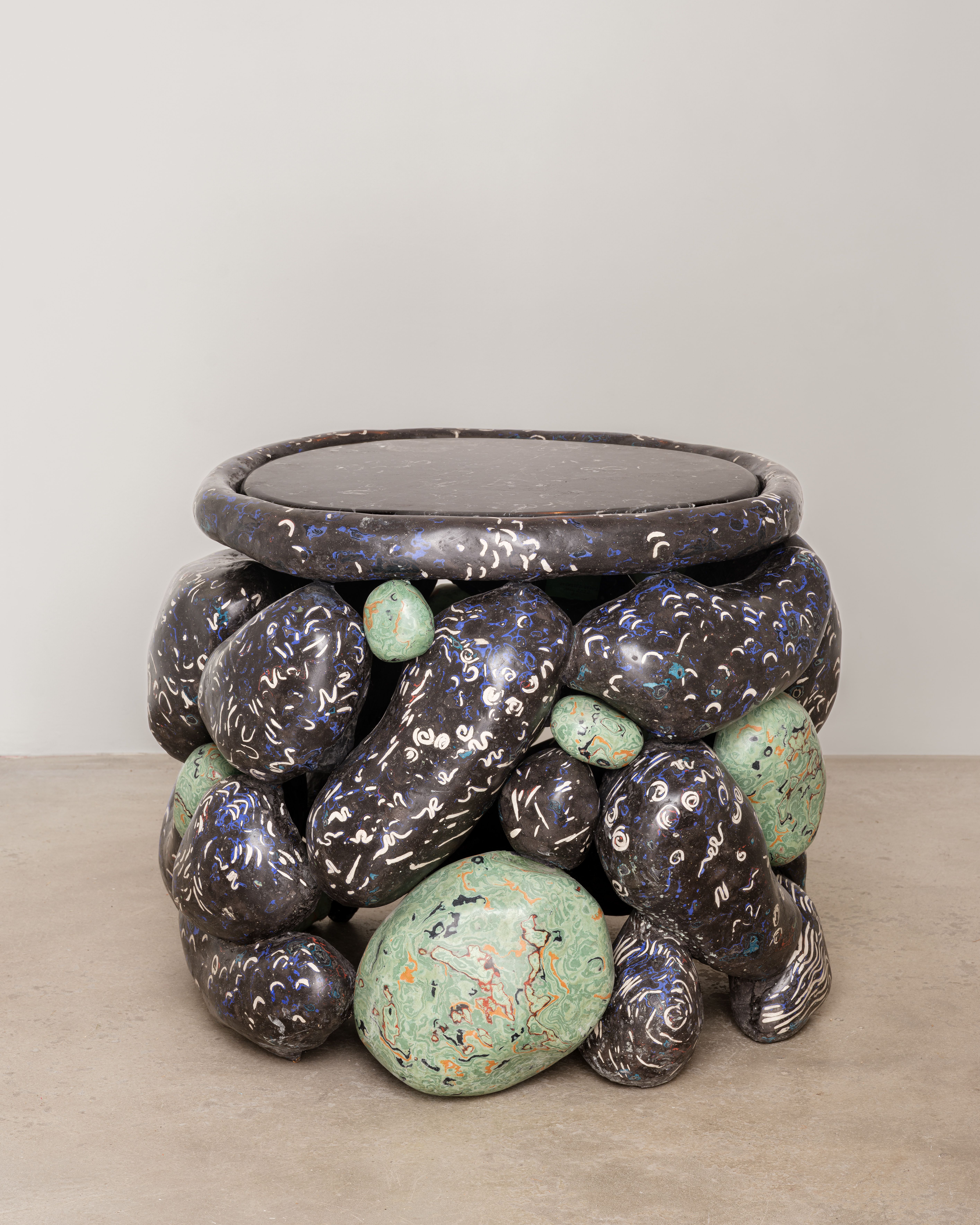
A moth does not announce itself. It arrives by night, navigating by starlight, drawn to flame—a creature of wings and darkness and longing, a master of disguise. COSMIA takes its name from one such moth, and from a song of the same name by the artist’s friend Joanna Newsom, in which moths carry the weight of grief for a lost beloved. It is a title that has earned its mystery.
Salon 94 is proud to present COSMIA, a solo exhibition by F Taylor Colantonio at 30 Galerie de Montpensier, Palais-Royal, Paris, on view 7 April through 9 May 2026, bringing together a new body of work in polished cartapesta, bronze, and fused glass.
The roots of COSMIA trace to Surrealist Paris: to Meret Oppenheim, who transfigured natural forms into objects of dream, and Leonor Fini, who conjured a world of ritual and mystery. Colantonio’s tradition is that of Diego Giacometti, who dissolved the boundary between furniture and sculpture, ancient form and modern hand, the earthly and the otherworldly.
Where the butterfly has long dominated the cultural iconography of transformation, the moth operates in its shadow, surviving through mimicry and camouflage. Colantonio treats the moth as a symbolic vehicle, a guide, a recurring formal and philosophical obsession. Bronze hinges of varying sizes and functionality—the creation of each one a small act of devotion—are integrated as crucial components of the works, some becoming standalone handheld sculptures themselves, one forming a gold crown. Titles of works are drawn from the taxonomy of Lepidoptera, species whose common English names ripple with mythology.
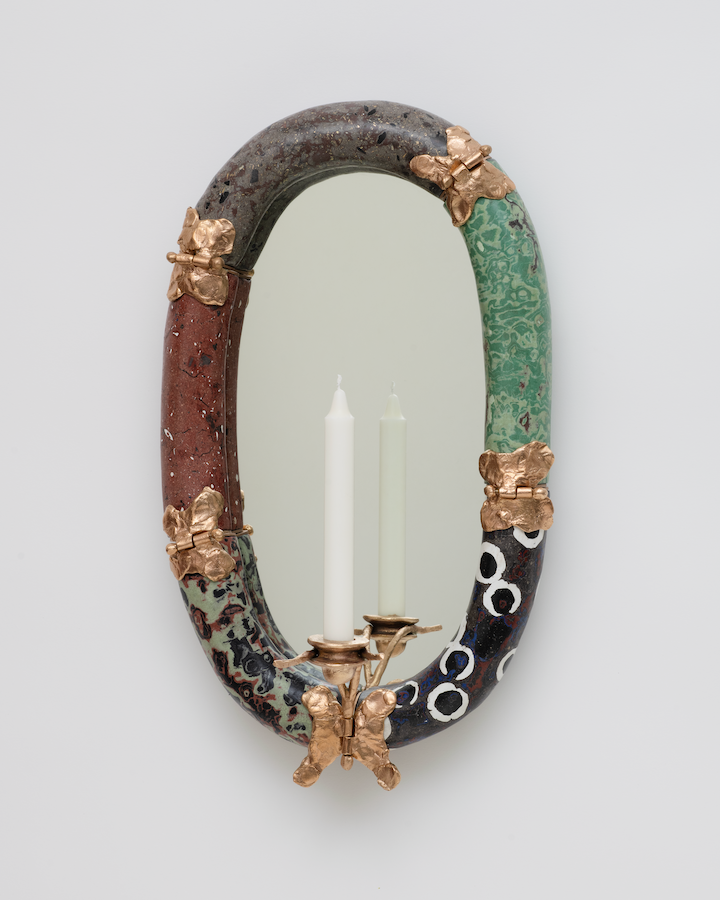
The show is anchored by mirrors. A large-scale hinged triptych mirror, The Seraphim, has a polished cartapesta frame resembling porphyry, connected with delicate gold patinated bronze hinges whose hinge-pins grow into towering bronze amphorae. In Saturnia, a diptych mirror in Colantonio’s signature green palette, a single bronze hinge sprouts an electrified torchère; Scorched Wing features a segmented oval frame reconstructed with mothlike hinges that swarm a central candle flame. Each mirror’s title borrows from moth nomenclature while reaching toward wider meaning: The Seraphim references both the moth Lobophora halterata and the holiest order of angels—the Burning Ones, the purifiers.
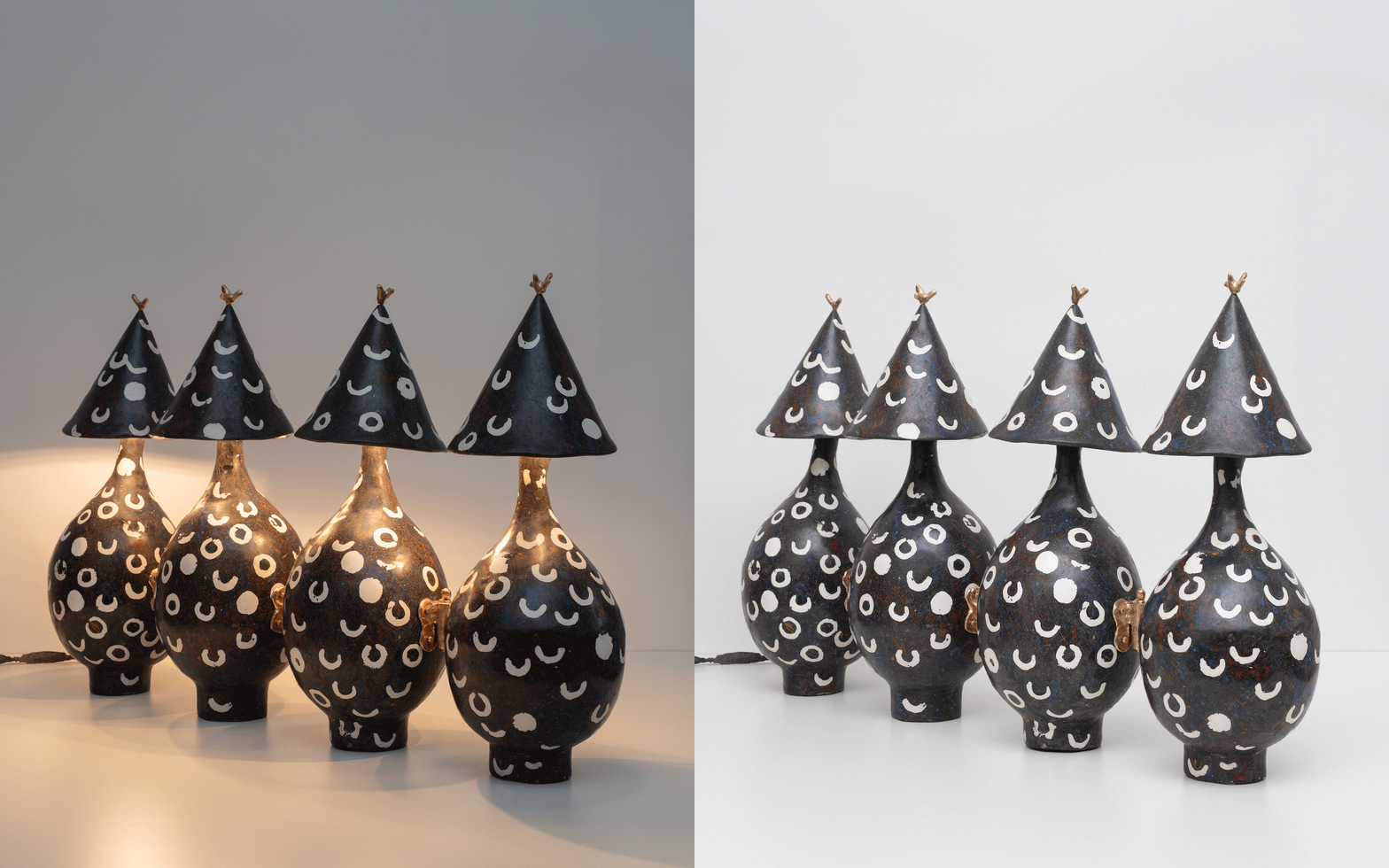
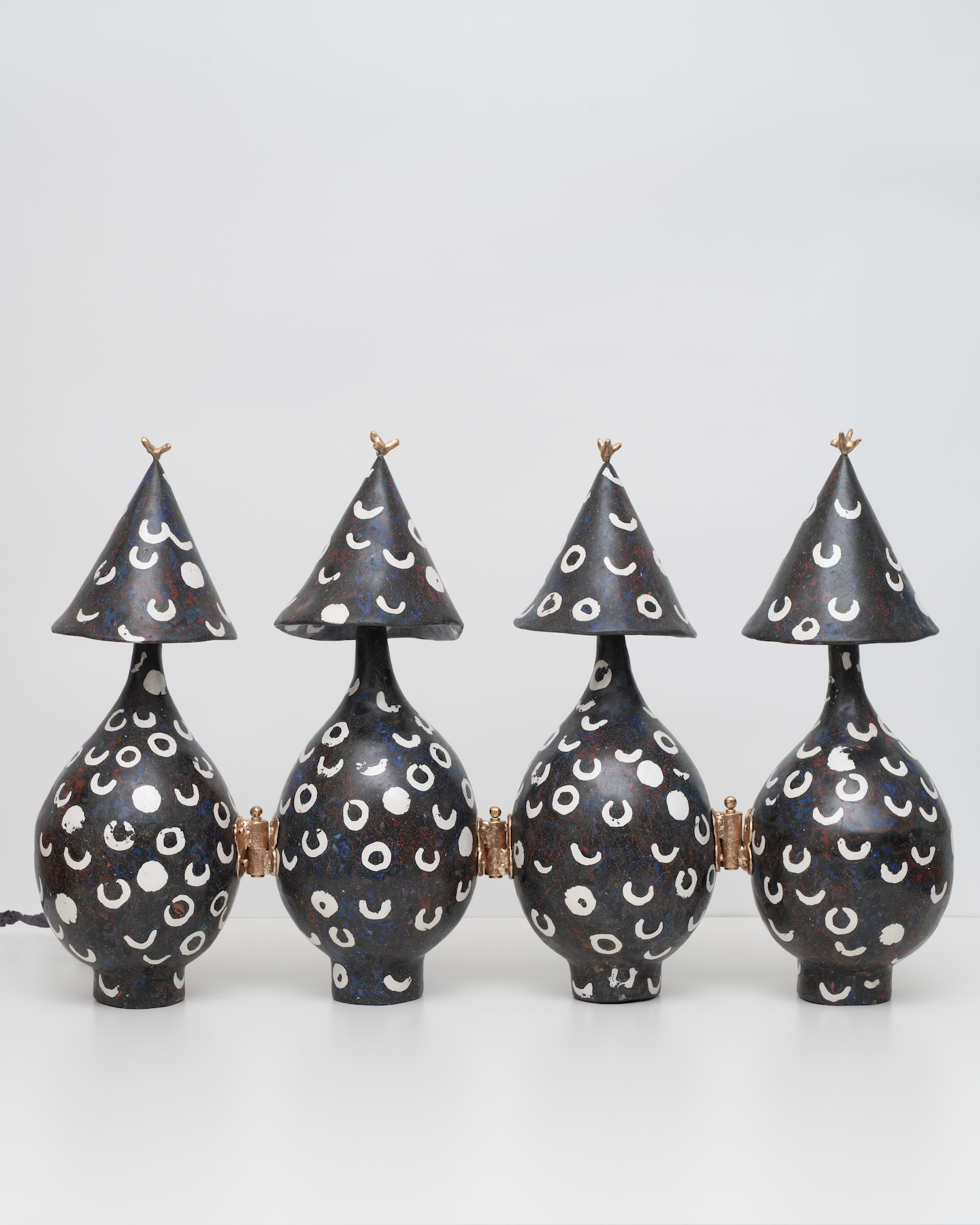
In Vigil—four table lamps—Colantonio combines his bronze hinges into a single serpentine sculpture, their cartapesta bodies covered in the eyespot motifs of moth camouflage. We are being watched, peacefully. From a technical standpoint, Vigil is masterful: the sculptural bronze hinges linking the individual bodies are specially machined to allow electrical wires to pass invisibly from one lamp to the next. Imago, an edition of lost-wax cast bronze chairs, captures the precise moment a moth emerges from its cocoon, wings soft and unfurling. Il Buon Tempo Verrà, a caterpillar-like bronze bench made up of five linked stools—one for each member of the artist’s family—can be individually detached and rejoined, metaphorically allowing for separation, alliance, and return. The stools’ forms are intended to recall excavated core samples of the Earth, and the title, translated as the good time will come, is drawn from an inscription on the gold ring worn by the poet Percy Bysshe Shelley.
Colantonio’s bronzes share a similar relationship with time to Giacometti’s: reaching for neither shine nor monumentality. What unites them further is the refusal to be dated. The material in both bodies of work feels accumulated rather than made, patinated, as though it had always existed. Giacometti drew on archaic forms without ever tipping into revival. Colantonio’s cartapesta technique has roots in Italian carnival and sacred sculpture going back centuries. He uses images from the natural world—the moth, the fossil—that carry no timestamp, that belong simultaneously to ancient funerary art, natural history, and contemporary conceptual practice.
A series of unique, wall-mounted hinged mask sculptures in sand-cast bronze—Comet, Emperor, Siren, Mother of Pearl, Weaver’s Wave, and Feathered Gothic—form an intimate counterpoint to the larger works. Conceptually rooted in the moth’s gift for camouflage and visual mimicry, eyespots become eyeholes, and the works emerge as fantastical self-portraits.
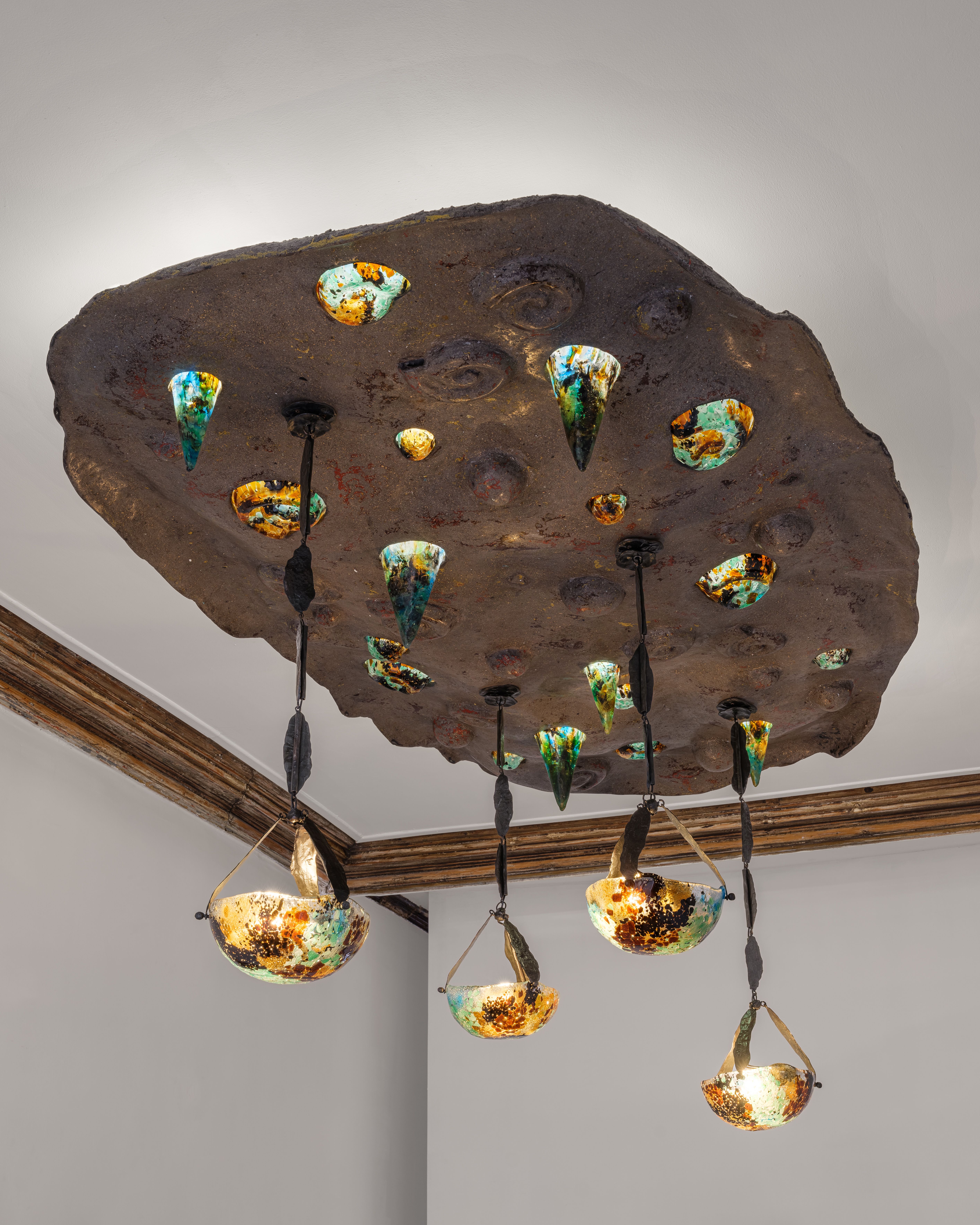
Hovering above it all is Cocoon Nebula, a large-scale lighted canopy in cartapesta, fused glass, and patinated bronze, taking its name from the colloquial moniker for the nebula IC 5146—a vast cloud of gas and dust, birthplace and incubator of new stars. Its suspended glass pendants and fossil-like inclusions suggest a celestial cocoon, referring to Shelley’s lines:
The desire of the moth for the star,
Of the night for the morrow,
The devotion to something afar
From the sphere of our sorrow?
Running as a quiet counterpoint through the exhibition is the fossil. Embedded in the cartapesta surfaces of Vigil, cast into the bronze of Il Buon Tempo Verrà, naturally occurring in the hand-honed marble of Occhi di Bosco, and suspended in the fused glass of Cocoon Nebula, fossil forms accumulate across the body of work as a second, opposing pole—their geological permanence a foil to the moth’s radical brevity. Some moth species live only days as adults, reborn without working mouths, unable to eat, their entire existence as an imago given over to a single purpose before dissolving into dust. The fossil, by contrast, materializes over millions of years: the trace of a bygone creature pressed into stone, surviving long after the life itself has vanished. Yet both are symbols of metamorphosis—one compressed into days, the other unfolding across deep time. Between them stands Colantonio’s bronze hinge: a mechanism of movement rendered in an ancient material, connecting what came before to what comes after.